Saturday, September 7, 2013
2012 Ducati 848 White Review Pictures


Wednesday, September 4, 2013
2012 Kawasaki Ninja Sports Bike Introduction Pictures
Prior to the advent of the FireBlade, large-capacity Japanese sports motorcycles had become polarised. On one side were the 750 cc sport bikes, influenced by Endurance racing and the World Superbike Championship. On the other, the "big-bore" 1,000 cc-plus sports-tourers had become the natural evolution of the performance bikes of the preceding 20 years. In simple terms, the 750s had the handling, the big-bores had the power. In both categories, Kawasaki ruled. The ZXR750 offered the technology and the performance of ultra-expensive racing-homologation models from Honda and Yamaha at half the price, and it outclassed the similarly priced GSX-R750 of the time, which still featured a perimeter frame and an oil-cooled engine, while the ZZ-R1100 held the title of the fastest production motorcycle on Earth.


[edit] ZX900 (1994)
The frame was a welded aluminium-alloy dual-beam with cast steering head and swingarm endplates, but with steel-tube engine cradles and swingarm-mount endplates extending back to support the riders seat and attach the bolt-on subframe, like the ZZ-R1100.


For 1998, Kawasaki completely redesigned the ZX-9R. The basic roadgoing bias of the bike, with the relaxed riding position and generous chassis dimensions remained, but the character of the bike was fundamentally changed.
Engine bore, stroke and redline remained unchanged; everything else was completely new. The clutch was changed from hydraulic to cable-operated. The generator was moved from behind the cylinder to the more conventional location at the left end of the crank. There was now no balance shaft. The valvetrain switched to direct valve actuation, and the cylinder head was plumbed for then-new plug-top ignition coils, replacing more conventional remote coils and high-tension leads. Notably, the new engine also featured a Hall-type cam position sensor on the exhaust camshaft. Cam position sensors are typically used in conjunction with electronic fuel injection. As the ZX900C featured induction by Keihin 40 mm CVKD carburettors, a cam position sensor wasnt necessary. Its inclusion could indicate that Kawasaki had designs to include fuel injection on the engine in the future, but this did not happen until the 2003 introduction of the Z1000, which uses a bored-out ex-ZX-9R engine with a side-draught cylinder head.


Wednesday, August 21, 2013
2012 Ural T – New Russian Model Introduction Pictures

Ural T is positioned as a universal device for everyday use, three-moto enthusiasts for beginners. The official recommended price of the basic version of the “Ural T” in the United States is 10 000 dollars.Power plant “Ural T” – a traditional technique for the 2-cylinder 40-strong motor, coupled with 4 speed gearbox (plus a back channel).


Wednesday, August 7, 2013
MV Agusta F3 675 2012
MV Agusta F3 675 2012 carrying the 3-cylinder engine capacity of 675 cc. This engine capable of producing power 126 hp with weights 173 kg. Wheel and rear swing arm be colored gold. Seat is designed for one person.


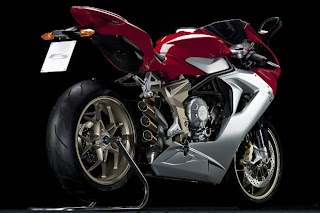
The price is US $ 16,480 and became available in European showrooms in January 2012.
Tuesday, August 6, 2013
Gold Wing 2012

| GENERAL INFORMATION | |
| Manufacturer | Honda |
| Model Year | 2012 |
| Model | Gold Wing GL1800 |
| MSRP | $ 23,199.00 |
| ENGINE | |
| Engine Type | 1832cc Liquid-Cooled horizontally opposed six-cylinder |
| Bore And Stroke | 74mm x 71mm |
| Induction | Programmed Fuel Injection (PGM-FI) |
| Ignition | Computer-controlled digital with three-dimensional mapping |
| Compression Ratio | 9.8:1 |
| Valve Train | SOHC; two valves per cylinder |
| DRIVETRAIN | |
| Transmission | Five-speed including Overdrive, plus electric Reverse |
| Final Drive | Shaft |
| CHASSIS/SUSPENSION/BRAKES | |
| Front Suspension | 45mm cartridge fork with anti-dive system, 4.8 inches travel |
| Rear Suspension | Pro Arm® single-side swingarm with Pro-Link® single shock with computer-controlled spring preload adjustment with two memory presets; 4.1 inches travel |
| Front Brake | Dual full-floating 296mm discs with CBS three-piston calipers |
| Rear Brake | Single ventilated 316mm disc with CBS three-piston caliper |
| Front Tire | 130/70R-18 |
| Rear Tire | 180/60R-16 |
| DIMENSIONS | |
| Rake | 29.15 degrees |
| Trail | 109mm (4.3 inches) |
| Wheelbase | 66.5 inches |
| Seat Height | 29.1 inches |
| Curb Weight | 904-933 pounds, depending on option packages selected (Includes all standard equipment, required fluids and a full tank of fuel-ready to ride) |
| Fuel Capacity | 6.6 gallons |
| OTHER | |
| Emissions | Meets current California Air Resources Board (CARB) and EPA standards. |
| Available Colors | Candy Red, Pearl White, Ultra Blue Metallic, Black |
| Warranty | Three Years |
Honda
Friday, July 26, 2013
2012 Harley Davidson XL883L Sportster� 883 SuperLow™
The 2012 Harley-Davidson XL883L Sportster® 883 SuperLow™ completed with Michelin® ScorcherTM tires with a tread pattern designed, tested and styled specifically for the Sportster® motorcycle to provide an ideal grip, an even wear and a longer life.

2012 Harley-Davidson XL883L Sportster® 883 SuperLow™ Specifications and Technician Details:
MSRP : -TBA
ENGINE
Type : Evolution®
Displacement : 53.9 ci (883 cc)
Bore x Stroke : 3 x 3.81 in. (76.2 x 96.8 mm)
Torque : 55 ft. lbs. (75 Nm) @ 3,500 rpm
Compression Ratio : 8.9:1
Fuel System : Electronic Sequential Port Fuel Injection (ESPFI)
Fuel Capacity : 4.5 gal. (17 l)
MPG Rating : 51 mpg
Cooling : Air
Exhaust : Chrome, staggered shorty with dual mufflers
Oil Capacity : 2.8 qt. (2.6 l)
DIMENSIONS
Length : 86.1 in. (2,187 mm)
Weight : Dry: 536 lbs. (243.1 kg)
Running Order: 563 lbs. (255.4 kg)
Ground Clearance : 3.8 in. (97 mm)
Wheelbase : 59.3 in. (1,506 mm)
Seat Height : Laden : 25.5 in. (648 mm) , Unladen : 26.8 in. (681 mm)
DRIVETRAIN
Transmission : 5-speed
Primary Drive : Chain, 57/34 ratio
Gear Ratios :
1st: 10.407
2nd: 7.436
3rd: 5.53
4th: 4.583
5th: 3.93
BRAKES/WHEELS/TIRES
Brakes : 2-piston front, 1-piston rear
Wheels : Front & Rear: Black, split 5-spoke with machined rim
Tires : Front: 120/70 ZR-18 , Rear: 150/60 ZR-17
ELECTRICAL
Lighting : High beam, neutral, low oil pressure, turn signals, engine diagnostics, low fuel warning, low battery, security system (optional)
Instrumentation : Handlebar-mounted electronic speedometer with odometer, time-of-day clock, dual tripmeter, low fuel warning light, low oil pressure light, engine diagnostics readout, LED indicator lights
OPERATIONAL
Rake : 31.1°
Trail : 5.7 in. (145 mm)
OTHER
Colors : Vivid Black, Ember Red Sunglo, Two-tone Midnight Pearl / Cool Blue Pearl, Two-tone Birch White / Sunburst Red
Wednesday, July 24, 2013
2012 Suzuki Hayabusa
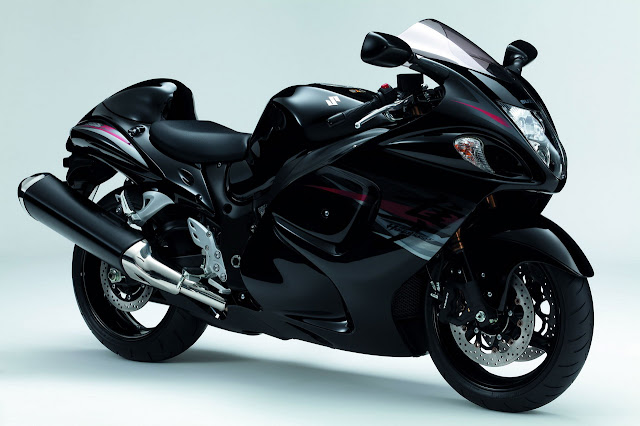
For 2012, the Hayabusa is available with new graphics and colors - Glass Sparkle Black and Candy Sonoma Red.
Ever since Suzuki introduced the Hayabusa, its had only one competitor: Itself. Thats why the latest Hayabusa is so impressive - compared to the original, its hotter than ever. For enthusiasts, that comparison will make your heart pound.

Building on an impeccable pedigree, the Hayabusa features a number of major developments to cement its place at the forefront of sportsbike styling, engineering and performance.
Effortlessly delivering broad, muscular torque, the new Hayabusa is powered by a 1,340cc, DOHC, liquid-cooled, four-cylinder, 16-valve engine, offering 11% greater performance and smoother running than its predecessor.
SDTV fuel injection system, with dual injectors per cylinder, improves power delivery for a more linear response, better fuel economy and reduced emissions.
ISC improves cold starts and maintains a stable idle, while the Suzuki PAIR system and large volume catalyser reduce emissions.
The new S-DMS delivers a choice of three different engine power characteristic settings to suit riding conditions and preferences.
A new 4-2-1-2 exhaust system includes dual, large-volume, tapered mufflers for increased banking angle, cornering clearance, enhanced power and reduced noise.
The slick-shifting six-speed transmission works in conjunction with the innovative SCAS back torque limiting clutch to deliver smooth and controlled downshifts.
Featuring fully-adjustable spring preload, compression and rebound damping on the front suspension and link-type rear shock absorber, the Hayabusas inverted cartridge forks use DLC surface treatment to reduce static friction and improve rider feel.
Race proven, aluminium piston, radial mount front brake calipers combined with smaller 310mm dual-floating-discs reduces unsprung weight and improves handling.

2012 Suzuki - Hayabusa Specifications
US MSRP Price: $13,999 USD
CHASSIS
Overall Length 2190 mm (86.2 in)
Overall Width 735 mm (28.9 in)
Wheelbase 1480 mm (58.3 in)
Ground Clearance 120 mm (4.7 in)
Seat Height 805 mm (31.7 in)
Curb Weight 260 kg (573 lbs)
Transmission 6-speed constant mesh
Final Drive Chain, RK GB50GSV Z4, 114 links
Suspension Front Inverted telescopic, coil spring, oil damped
Suspension Rear Link type, coil spring, oil damped
Brakes Front Disc brake, twin
Brakes Rear Disc brake
Tires Front 120/70ZR17 M/C (58W), tubeless
Tires Rear 190/50ZR17 M/C (73W), tubeless
Fuel Tank Capacity 21.0 L (5.5 US gallons)
Fuel Tank Capacity CA 20.0 L (5.3 US gallons)
Color Glass Sparkle Black and Pearl Glacier White
ENGINE
Displacement 1340cc, 4-stroke, Liquid-cooled, 4-cylinder, DOHC
Fuel System Suzuki fuel injection
Starter Electric
Ignition Electronic ignition (transistorized)
WARRANTY
Warranty 12 month unlimited mileage limited warranty.

Tuesday, July 23, 2013

Saturday, July 20, 2013
2012 The Honda Rune Concept

Friday, July 19, 2013

2012 Kawasaki ER6n Review Pictures and Specs

2012 Kawasaki ER6n Review

2012 Kawasaki ER6n Features
To enable the future more compact, the instrument cluster was removed as far as possible. Mounted on the handlebars. Stacked instrument cluster features easier to read layout and style of an analog tachometer uses a white LED backlights for excellent visibility at night. Multi-function LCD screen has the blue backlighting. In addition to the fuel gauge, digital speedometer, clock, odometer and dual trip meters, new features include: the rest of the range, fuel consumption average instant and economical riding indicator.
Tick marks on the tachometer dial, raised face, bubble lens and frame construction instruments contribute to elevated the readability of greater instrumentation and high quality images.
Double-pipe All-new perimeter-frame style
As in its predecessor, double-pipe all-new perimeter-frame style is a key component of the ER-6n identity. As before, the new bodywork accentuates the frame, rather than hide it. Design of double-pipe frame, made of steel with a high rift, contributes to the bike lightweight appearance.
Lighter handling
Frame rigidity balance double-pipe and swingarm contributes to the package handling lighter, easier. Rigid-mounted engine was a member, contribute to stress the ideal frame rigidity balance.
New design Swingarm the dual pipeline makes use of the D-section tube (right tube) for an optimal rigidity. Revised suspension has a long stroke front and rear, offering sporty handling and refined comfort. Rear shock length and stroke 2 mm longer; the front fork is 15 mm longer stroke length 5 mm to match hindsight. Turn the spring Stroke lower levels. Damping has been revised accordingly.
The fuel tank is higher
The fuel tank is 20 mm higher, helped to concentrate the ER-6n visual mass in front of the bike. The back of the tank slopes back in a straight line to the Chair.
Other torque in the range of every dayUnder-Engine muffler with more volume and revision of internal construction provides increased torque on the range on a daily basis under 7,000 rpm. Improvements to facilitate controls on low rpm and contributes to improving the enjoyment of 6n-ER.

2012 Kawasaki ER6nSpecifications
ENGINEType 4-stroke, Parallel Twin
Displacement 649cc
Bore and Stroke 83.0 x 60.0 mm
Cooling Liquid
Compression Ratio 10.8:1
Valve System DOHC, 8 valves
Fuel System Digital fuel injection with two 38 mm Keihin throttle bodies
Ignition Digital
Lubrication Forced lubrication (semi-dry sump)
DRIVETRAIN
Transmission 6-speed, with positive neutral finder
Final Drive Sealed Chain
Primary Reduction Ratio 2.095 (88/42)
Gear Ratio: 1st 2.438 (39/16)
Gear Ratio: 2nd 1.714 (36/21)
Gear Ratio: 3rd 1.333 (32/24)
Gear Ratio: 4th 1.111 (30/27)
Gear Ratio: 5th 0.966 (28/29)
Gear Ratio: 6th 0.852 (23/27)
Final Reduction Ratio 3.067 (46/15)
Clutch Wet multi-disc, manual

FRAME
Type Perimeter, high-tensile steel
Wheel Travel: Front 125 mm (4.9 in.)
Tire: Front 120/70ZR17M/C (58W)
Wheel Travel: Rear 130 mm (5.1 in.)
Tire: Rear 160/60ZR17M/C (69W)
Caster (Rake) 25º
Trail 110 mm (4.3 in.)
Steering Angle (Left/Right) 35º / 35º
SUSPENSION
Suspension, Front 41 mm telescopic fork
Suspension, Rear Offset laydown single-shock with adjustable preload
BRAKES
Front: Type Dual semi-floating 300 mm petal discs
Front: Calipers Dual piston
Rear: Type Single 220 mm petal disc
Rear: Caliper Single-piston
DIMENSIONS
Overall Length 2,110 mm (83.1 in.)
Overall Width 770 mm (30.3 in.)
Overall Height 1,110 mm (43.7 in.)
Wheelbase 1,410 mm (55.5 in.)
Ground Clearance 130 mm (5.1 in.)
Seat Height 805 mm (31.7 in.)
Curb Mass** 204 kg (449.7 lbs.)
Fuel Capacity 16 litres (3.5 gal.)
Fuel Consumption N/A
PERFORMANCE
Maximum Power‡ 53 kW {72.1 PS} / 8,500 rpm
Maximum Torque‡ 64 N.m {6.5 kgf.m} / 7,000 rpm
DETAILS
MSRP* N/A
Colours Pearl Shining Yellow, Metallic Spark Black
Warranty 12 months warranty
ADDITIONAL COST OPTIONS
2012 Kawasaki ER6n Photos and Pictures

